
Spaces that act.
Designing environments that sense, anticipate, respond, and can be controlled with calm interaction. This is how our work differs from the smart home.
The "smart home" today is a collection of gadgets and apps. They demand attention, add screen time, and often frustrate the people they were meant to serve. Building intelligence is what comes next, and is how air, light, and sound adjust to the people in a space. Environments that recognize presence, anticipate need, and act with quiet precision. It starts with UX for Spaces, our process for setting targets for how a space affects the body, mood, rhythm, and daily use before any system is selected.
Awareness
A building that pays quiet attention.
Awareness is how the building reads its environment. Air quality, occupancy, daylight, energy, water, all tracked as one system rather than separate signals. CO₂ rises and fresh air increases. A leak triggers shutoff before damage spreads. Energy waste is flagged early. The building recognizes who belongs where, and notices when something is out of pattern. The building knows what is happening before anyone has to notice.
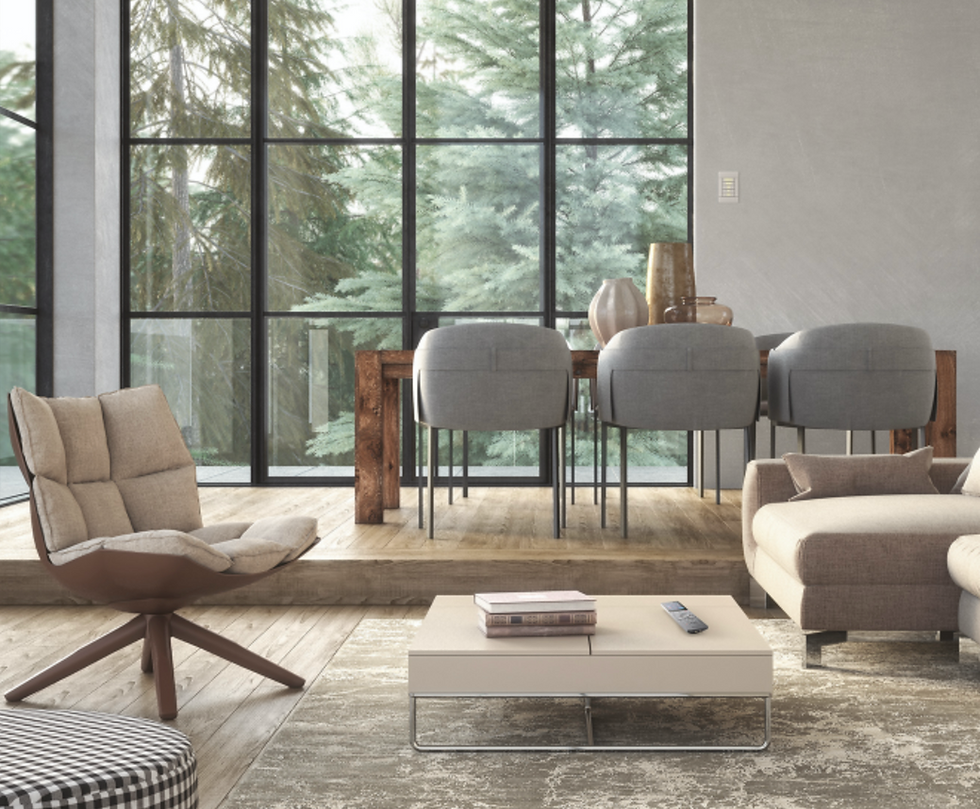
Anticipation
A building that stays one step ahead.
Anticipation is the building acting before it is asked. Morning scenes lift with light, warmth, and fresh air before anyone wakes. Meeting rooms balance climate and ready displays in advance. Storms or fires close windows and adjust ventilation. Service zones brighten before staff turnovers. Each gesture removes friction and gives time back.

Response
Spaces that adapt as life unfolds
Responsiveness is the building reacting in real time to what awareness and anticipation have set up. Circadian lighting shifts tone through the day. Shades follow the sun to soften glare and manage heat. Pathway lights guide quietly at night. HVAC increases fresh air as CO₂ rises. The response is precise, designed to support comfort without asking for attention.
Control
Technology designed to feel simple.
Control is how people direct the building when they choose to. A single button adapts by context, guiding at night, welcoming in the morning. Labels and icons stay consistent across every space. Keypads are placed with intention and blended into the architecture. Fewer buttons. Calmer interfaces. The best control is the kind people rarely need.

Adaptability
Design that flexes with time, growth, and change.
Adaptability is what keeps the building current. Keypads reprogram as routines shift or staff rotate. Scenes evolve as families grow or properties take on new roles and owners. Infrastructure supports future devices without tearing into walls. Software updates improve performance without disruption. The building matures alongside the people it serves.


Calm
Calm is the measure of Building Intelligence.
There is a discipline behind this word. Calm technology was first described by Mark Weiser at Xerox PARC in the 1990s, then carried forward by Amber Case, who founded the Calm Tech Institute and authored the eight principles that define the field. Those principles are the standard we work to. Technology should require the smallest possible attention. It should work in the periphery. It should be the minimum needed to solve the problem.